
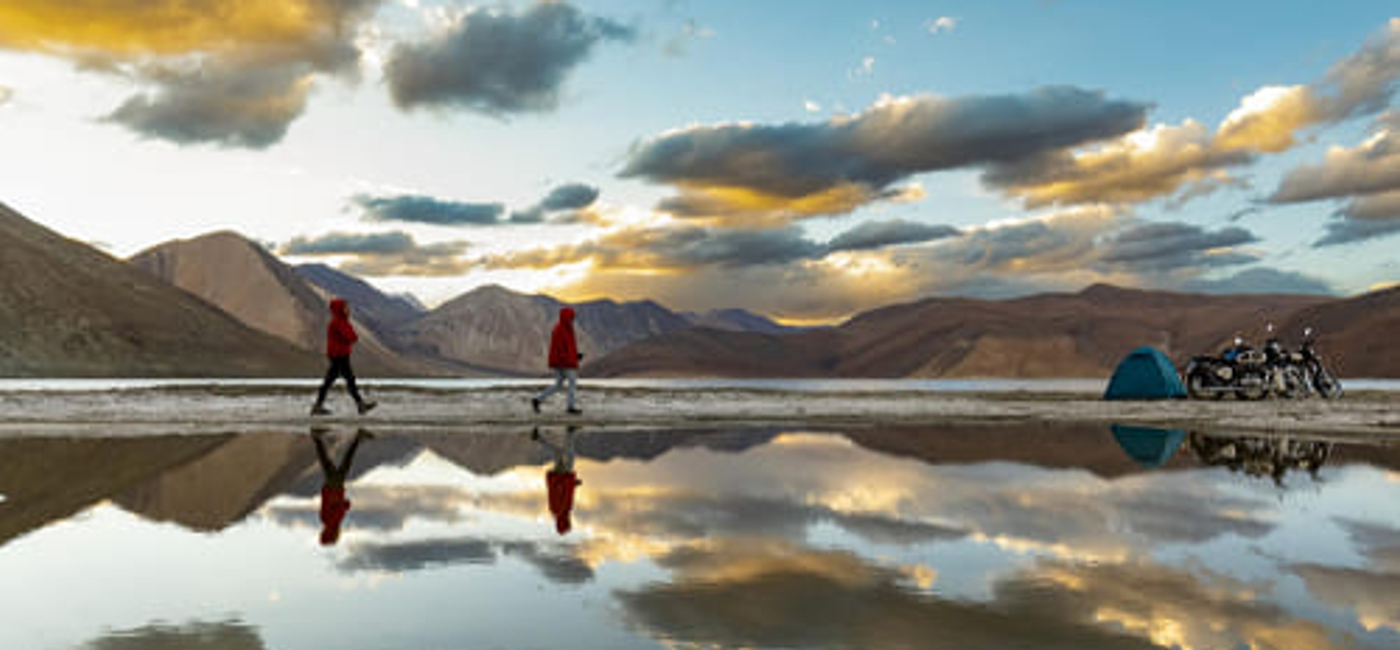
Ladakh is unlike anywhere else on earth. This complete guide covers everything — how to get there, acclimatisation, best time to visit, top attractions, permits, and practical tips.
Ladakh is not like other destinations. At an average altitude of 3,500 metres, with some passes crossing 5,000 metres, this vast high-altitude desert on India's northernmost frontier demands respect, preparation, and a willingness to travel slowly. The rewards — otherworldly landscapes, ancient Buddhist monasteries, the bluest skies you have ever seen, and a profound sense of being at the edge of the world — are immense.
Getting to Leh
The most practical way to reach Leh is by direct flight from Delhi, Mumbai, or Srinagar. Flights from Delhi take about 1.5 hours and offer one of aviation's great views: the Himalayas spread below you before the brown, stark landscape of Ladakh appears. Book flights early — the Leh route fills up quickly in summer. The alternative is the Manali–Leh Highway (2 days) or the Srinagar–Leh Highway via Sonmarg (1 day, open May to November).
Acclimatisation — The Most Important Section
This cannot be overstated: altitude sickness is real, serious, and can ruin your trip if ignored. Leh sits at 3,500m. On arrival day, do absolutely nothing. Rest, drink 3–4 litres of water, avoid alcohol and heavy food, and sleep early. Day 2 can involve light sightseeing at valley level. Do not go above 4,000m until Day 3 at the earliest. Diamox can help — consult your doctor before travel.
Best Time to Visit Ladakh
June to September is the main season. July and August are peak months — warm and dry, all passes open, all attractions accessible. June is excellent — fewer crowds, lower prices. September is beautiful — harvest season, golden light, first hints of autumn. October brings dramatic temperature swings. November to May is extremely cold — not recommended for general tourism.
Top Attractions in Ladakh
Leh city: Leh Palace, Shanti Stupa, Namgyal Tsemo Gompa, old bazaar. Monastery circuit: Thiksey (must-visit), Hemis (largest in Ladakh), Alchi (oldest, 11th century), Lamayuru (dramatic moonland setting). Nubra Valley: Khardung La Pass, Hunder sand dunes with Bactrian camels, Diskit Monastery. Pangong Lake: the undisputed highlight — 134 km long, 17 shades of blue, overnight camping essential.
Permits Required
Foreign nationals require an Inner Line Permit (ILP) for Nubra Valley, Pangong Lake, and areas near the Line of Actual Control. Indian nationals do not need permits for most standard destinations. Your tour operator will handle all permits — iC Kashmir manages all applications and carries multiple copies. Bring extra passport-sized photos.
What to Pack
Warm base layers (even in summer, nights drop to 5°C), a down jacket, sunscreen SPF 50+, UV-protection sunglasses (mandatory), a wide-brimmed hat, comfortable walking shoes with grip, a reliable water bottle, any prescription medications plus altitude sickness medication, and a power bank. Cash is essential beyond Leh town.
Responsible Travel in Ladakh
Carry your rubbish out with you. Use refillable water bottles. Respect monastery etiquette — remove shoes, dress modestly, do not touch sacred objects. Do not give money or sweets to children. Buy local products directly from artisans. Stay in locally-owned guesthouses where possible. Travel slowly, stay longer, and leave the landscape exactly as you found it.
Plan Your Ladakh Trip with iC Kashmir
Whether you want a fast-paced overview or a slower, acclimatisation-friendly trip, we run set-departure and fully customised Ladakh journeys covering Leh, Nubra Valley, and Pangong Lake, with all permits, transport, and stays arranged for you.
A shorter option covers Leh, Nubra, and Pangong in 5 days, while a longer version adds Khardung La, Turtuk, and more time at altitude to acclimatise comfortably.
Frequently Asked Questions
Can I visit Ladakh without prior high-altitude experience?
Yes, most healthy travellers adjust fine as long as they follow the acclimatisation schedule closely, especially resting fully on arrival day and increasing altitude gradually.
Should I fly into Leh or drive from Srinagar or Manali?
Flying is fastest and easiest, especially for shorter trips. If you have extra time and want a spectacular overland journey with its own attractions, the Srinagar-Leh or Manali-Leh highways are a memorable option, best combined with our Kashmir and Ladakh tour for a fuller itinerary.
Can Ladakh be combined with Kashmir in one trip?
Yes. Many travellers combine both by driving the scenic Srinagar-Sonmarg-Zojila-Kargil-Leh route, or by flying between the two. Share your dates with our team and we will build a combined Kashmir-Ladakh itinerary around your available time.
Ready to plan your Ladakh journey? Share your travel dates and group size, and iC Kashmir will handle permits, transport, stays, and a realistic day-by-day plan built around safe acclimatisation.
📞 Call or WhatsApp: +91 85276 76141
📧 Email: info@ickashmir.in
🌐 Website: ickashmir.in